
Poached Salmon Recipe (Tender, Juicy & Easy Method)
If you’re looking for a way to make tender, juicy salmon without the risk of it drying out, poached salmon Recipe is the perfect choice. This gentle cooking method relies on low heat and flavored liquid, which preserves the fish’s texture and natural flavor. The result? Tender salmon that melts in your mouth—and you can easily prepare it even if you’re a beginner in the kitchen. If you’re exploring different cooking methods, check out this complete guide on How to Cook Salmon to compare techniques like grilling, baking, and pan-searing.
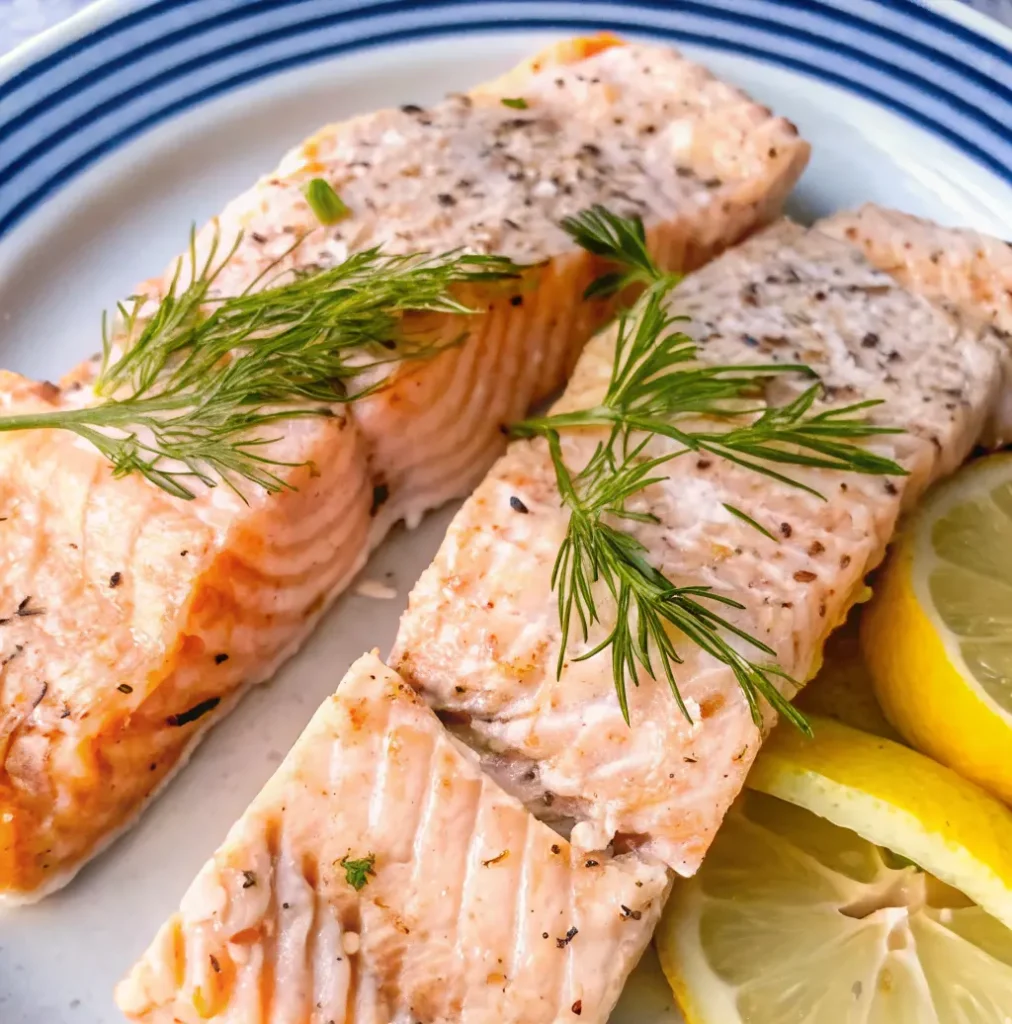
How to Poach Salmon (Quick Answer)
To be honest with you, Poached Salmon is easier than it sounds. Start by adding water, broth, or even a splash of wine to a shallow pan — that’s your flavor base. Heat it gently; no boiling, just a soft simmer. Slide in the salmon fillets carefully, skin side down. Let them cook quietly for 10–15 minutes. Now, you might be wondering if it’s ready — simply check if it flakes easily with a fork. If it does, you’re done. In short, low heat and patience make all the difference.
What is Poached Salmon
Poached Salmon Recipe is salmon gently cooked in liquid at low temperature — no boiling, no aggressive heat. I used to think it was bland, but now I see it differently. It’s delicate, almost luxurious, allowing the fish to shine without overpowering it. Simple cooking, real flavor.
Unlike high-heat methods like Pan Seared Salmon or Broiled Salmon, poaching uses gentle heat to preserve moisture.
Why you’ll love this recipe
- Ridiculously tender texture Believe it or not, Poached Salmon stays moist in a way most cooking methods struggle to achieve.
- Surprisingly simple process To be honest with you, it looks fancy but it’s almost effortless; minimal prep, gentle heat.
- Healthy without trying too hard Let’s be real for a second — it’s packed with nutrients, low in fat, and doesn’t need heavy sauces to shine.
- Flexible and forgiving You won’t believe this, but even if you tweak ingredients or timing slightly, it still turns out delicious.
How Long to Poach Salmon
Timing can make or break Poached Salmon. Thin fillets usually take around 8–10 minutes, while thicker cuts need 12–15 minutes at a gentle simmer. I used to rush it — big mistake. Low and slow wins here.
The crazy part is, the fish keeps cooking slightly even after you remove it from the liquid. So don’t wait too long. Trust me on this one — pull it just as it turns opaque and flakes easily. If you’re short on time, try this faster method: Air Fryer Salmon
Ingredients You’ll Need
Key Ingredients:
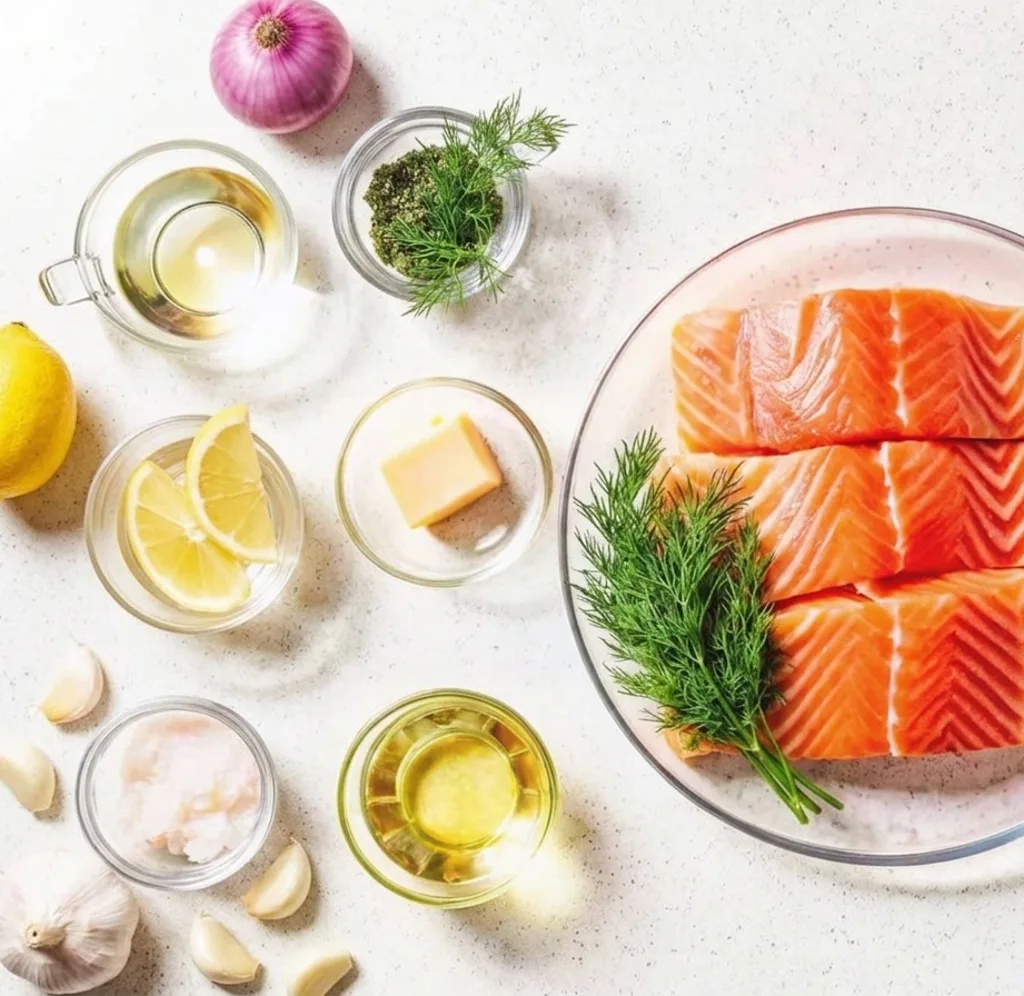
- Fresh salmon fillets — The heart of the dish; choose bright, firm cuts. Skin-on works beautifully.
- Water or broth — The poaching liquid; vegetable or fish broth adds deeper flavor.
- Lemon slices — Adds brightness — don’t skip it unless you must.
- Garlic cloves — Lightly crushed for subtle aroma.
- Fresh herbs (dill, parsley, thyme) — This is where things get interesting; herbs define the personality of your dish.
- Salt and pepper — Simple, but essential.
- Olive oil — A small drizzle elevates everything.
Substitution ideas:
- No fresh herbs? Use dried — just reduce the amount.
- No lemon? Try a splash of vinegar — oddly enough, it works.
- Want richer flavor? Swap water for white wine (half and half with broth).
Recipe Options:
- Add sliced onions for sweetness
- Toss in peppercorns for a gentle kick
- Use coconut milk for a creamy twist — I know, sounds unusual, but trust me on this one
You can boost flavor further using a simple Salmon Marinade before cooking.
Best Seasonings for Poached Salmon
Believe it or not, Poached Salmon doesn’t need heavy seasoning to taste incredible. Keep it simple, but intentional. Salt and freshly cracked pepper are your base — no shortcuts there. Add lemon slices for brightness, garlic for depth, and fresh herbs like dill or parsley to bring everything together.
You can also use different seasonings, such as Salmon Asian Rub, before cooking to add extra flavor.
Timing
- Preparation time: 10 minutes
- Cooking time: 12–15 minutes
- Total time: About 25 minutes
How to Make Poach Salmon (Step-by-Step)
1. Prepare the Poaching Liquid
Start with a wide, shallow pan — space matters more than depth here. Add water or broth, then layer in lemon slices, garlic, and herbs.
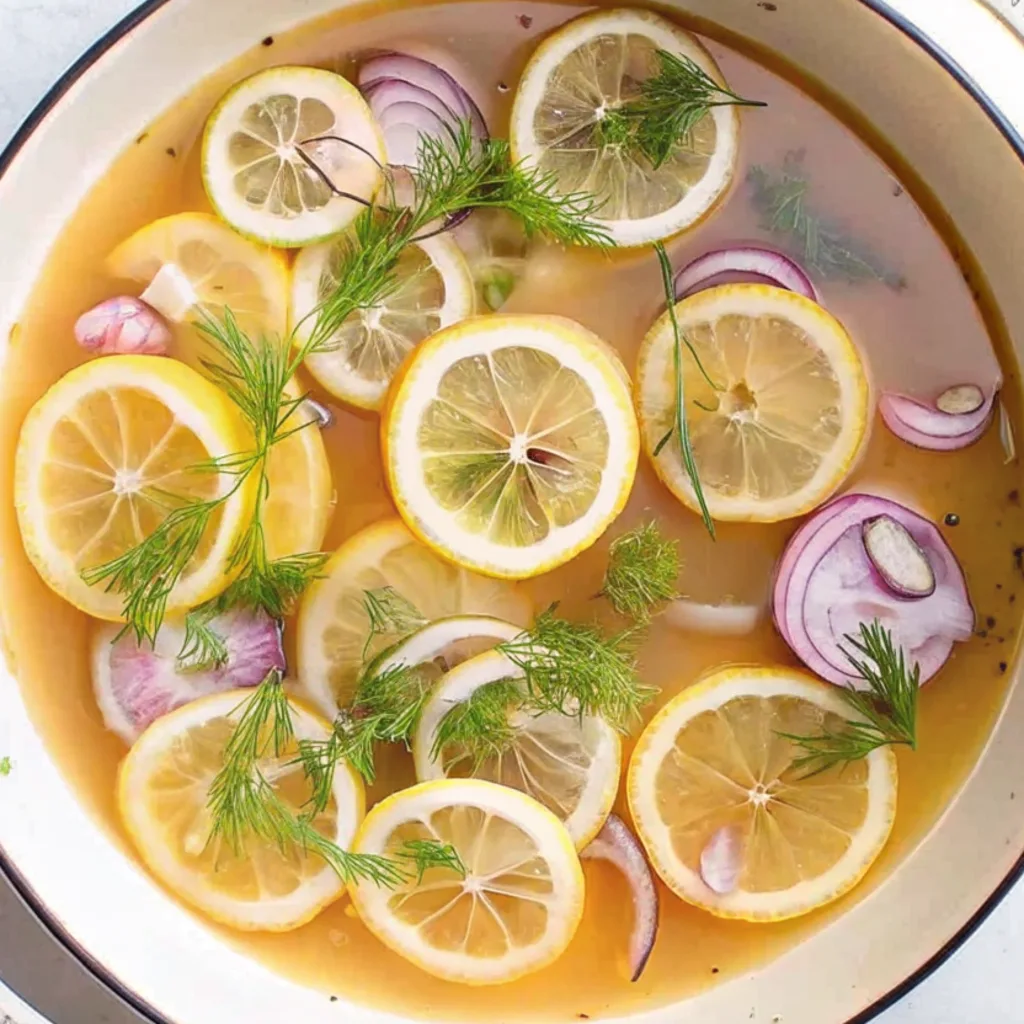
Bring it to a gentle simmer. Not boiling. Tiny bubbles should barely rise — that’s your sweet spot for Poached Salmon.
2. Season the Salmon
Pat the salmon dry first — it helps seasoning stick better. Sprinkle salt and pepper evenly, then add a light drizzle of olive oil.
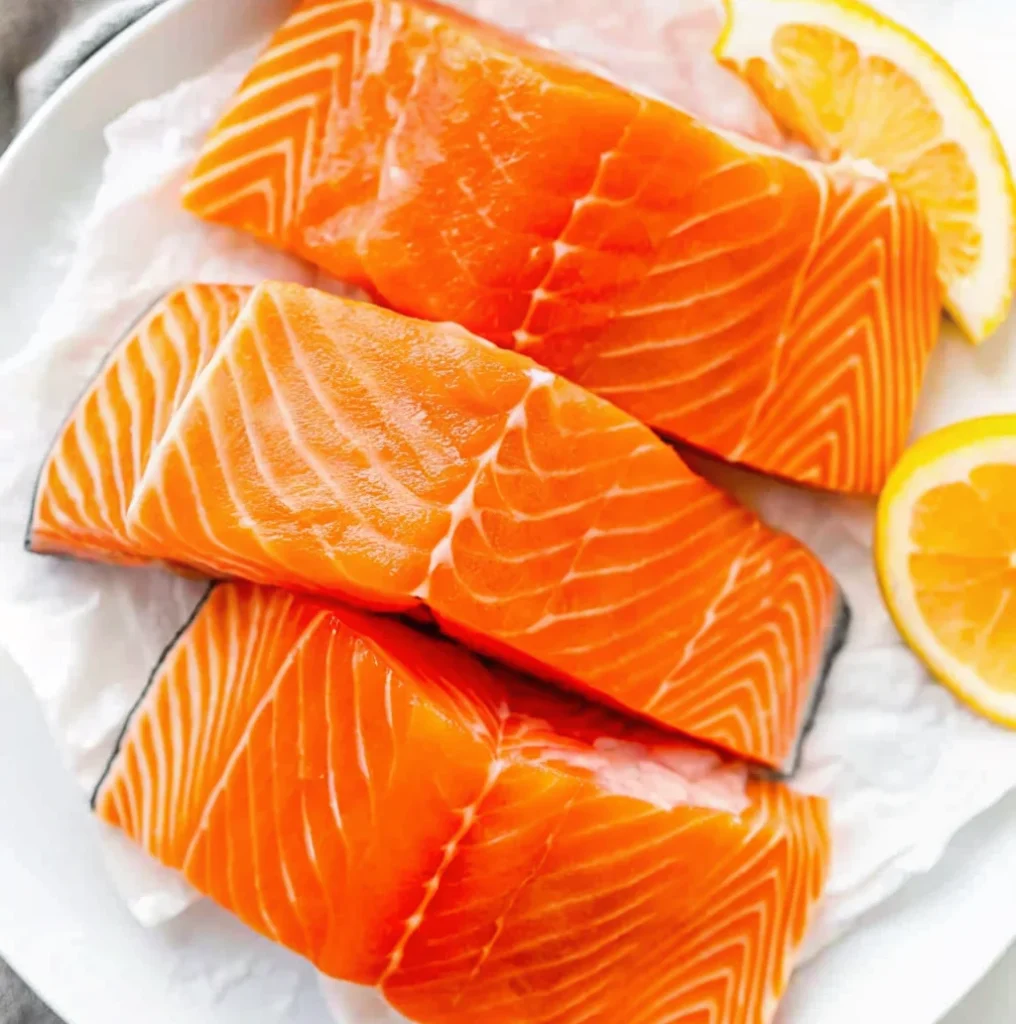
Trust me on this one — simple seasoning lets Poached Salmon shine without masking its natural flavor.
3. Gently Add the Fish
Lower the fillets into the liquid using a spatula or spoon. Skin side down keeps things stable.
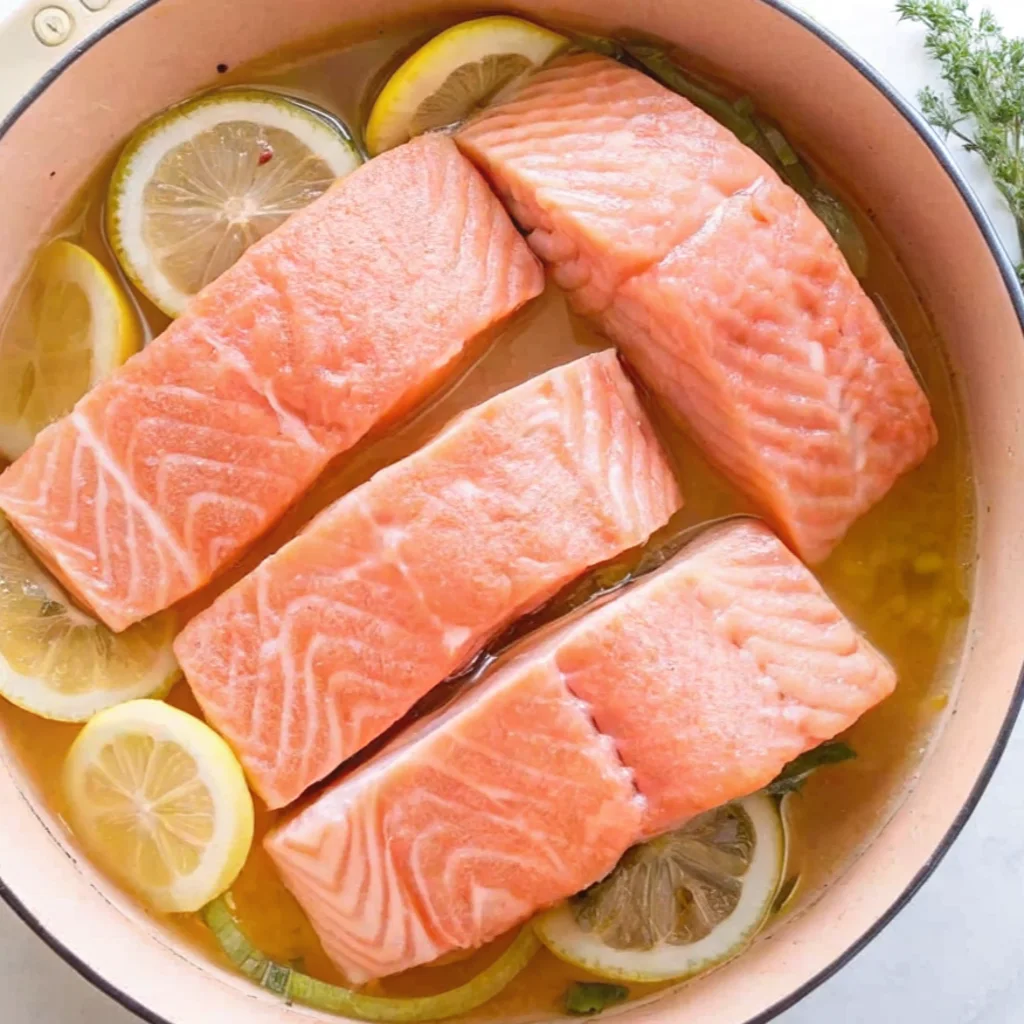
The liquid should cover the fish partially. If not, add a bit more — but don’t drown it completely.
4. Maintain Low Heat
Keep the heat low and steady. No sudden temperature spikes — they ruin texture fast.
Cover loosely with a lid. This traps heat gently, helping Poached Salmon cook evenly without turning tough.
5. Monitor the Cooking
Check occasionally, but don’t fuss too much. Around the 10-minute mark, the color begins to change.
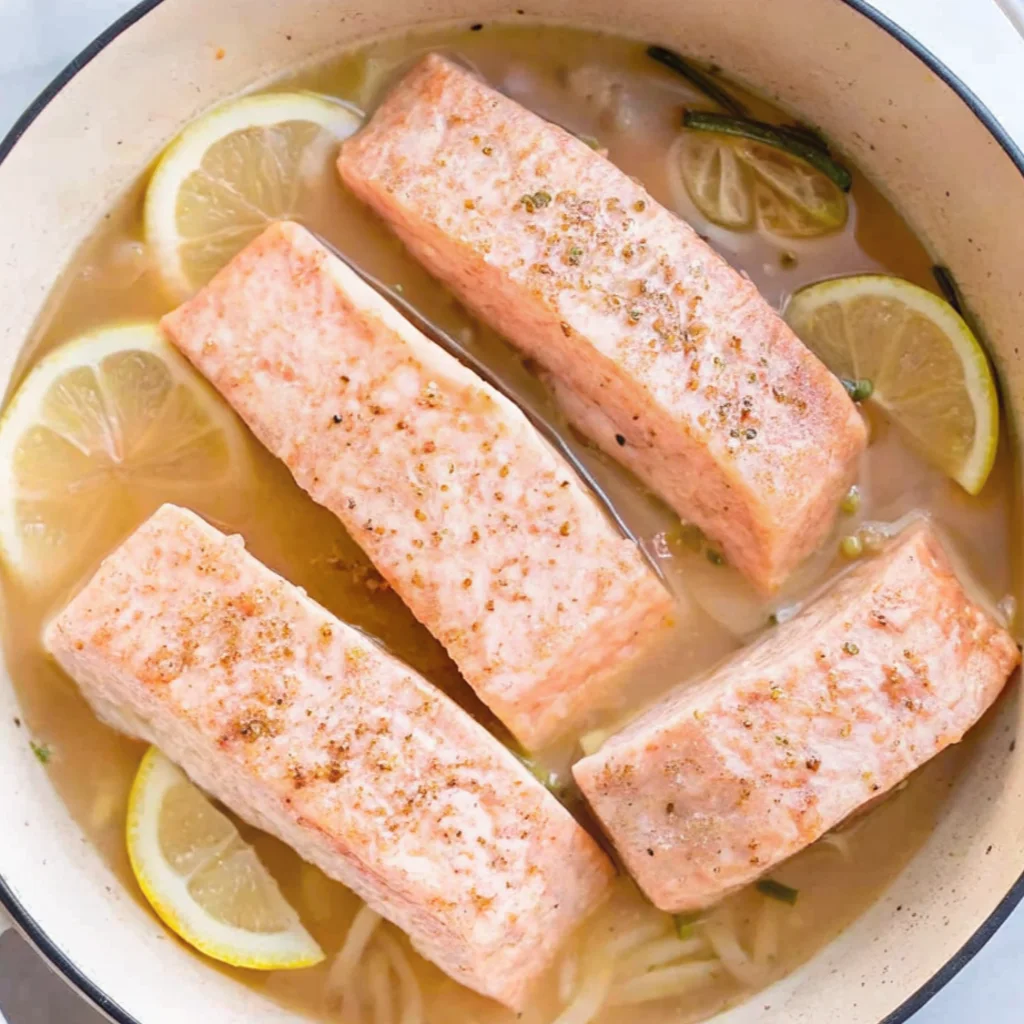
You’ll notice the flesh turning opaque from the outside in — that’s your visual cue everything is going right.
6. Test for Doneness
Slide a fork into the thickest part. If it flakes easily, it’s done.
I used to overthink this step — but honestly, Poached Salmon tells you when it’s ready if you pay attention.
7. Remove and Rest
Lift the salmon carefully from the liquid and let excess drip off. Place it on a plate and let it rest briefly.
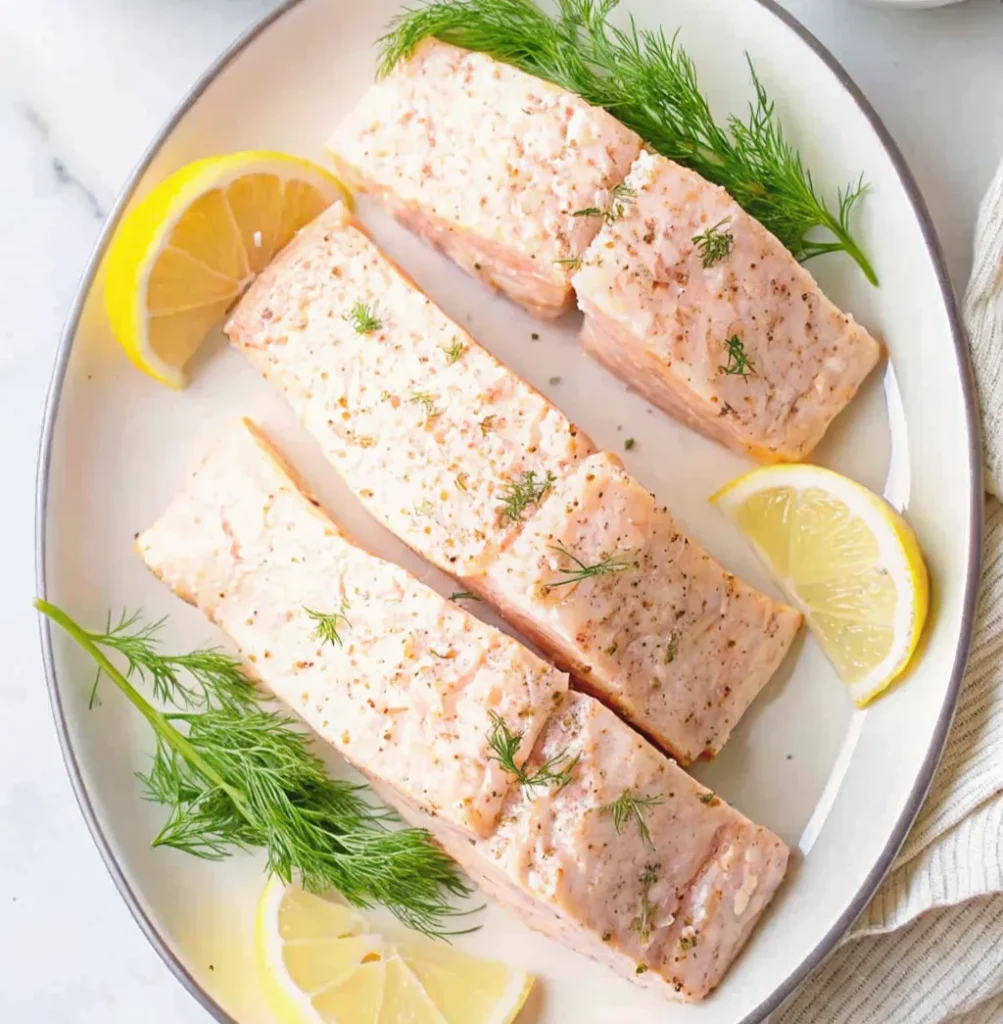
This short pause — just a minute or two — helps the juices settle, giving you that soft, silky finish.
Tips for Perfect Poached Salmon
- Keep the liquid just below a simmer — small bubbles only; that’s the secret to flawless Poached Salmon
- Use a thermometer if possible; aim for 50–55°C internally for tender results
- Don’t overcrowd the pan — give each fillet breathing room for even cooking
- Add aromatics early — herbs, citrus, and garlic infuse deeper flavor into Poached Salmon
- Let it rest briefly after cooking — a minute makes a noticeable difference in texture
- For a crispy crust instead of a soft texture, try Cast Iron Salmon.
Make-Ahead, Storage & Reheating Tips
I’ve struggled with this for years — keeping salmon tasty after cooking isn’t always easy.
Can You Make It Ahead
Yes, absolutely. Poached Salmon actually holds up well when prepared in advance. Store it in its poaching liquid — that’s the trick. It prevents dryness and keeps flavor intact.
How to Store
Place the salmon in an airtight container, ideally submerged slightly in leftover liquid. Refrigerate for up to 3 days. It sounds too good to be true, right? But it works beautifully.
Way to Reheat
Avoid microwaving if possible. Instead, gently warm it in a pan with a bit of liquid over low heat.
To my absolute surprise, this method keeps it tender — not rubbery.
How to Serve Poached Salmon Recipe
Now, you might be wondering — what goes with Poached Salmon?
- Serve with roasted vegetables for a wholesome meal
- Pair with rice or quinoa — light but satisfying
- Add a creamy dill sauce for extra indulgence
- Flake it into salads — fresh and vibrant
Personally, I love it cold the next day with a squeeze of lemon — simple, clean, unforgettable.
Best Liquid for Poaching Salmon
Water works. But let’s be honest — broth, wine, or herb-infused liquids elevate everything. I prefer a mix of broth and lemon slices. It creates a subtle depth without overpowering the fish. Fair enough, you can experiment — that’s where the fun begins.
How to Know When Salmon is Done
Look for opacity. The flesh should turn light pink and flake easily. Press gently with a fork. If it separates, it’s ready. I’ll be the first to admit — I used to overcook it, but practice fixes everything.
Can You Poach Frozen Salmon
Yes, you can. No need to thaw completely. Just add a few extra minutes to cooking time. The point I’m trying to make is — it’s forgiving. Still, fresh salmon gives better texture — no shortcuts there.
Poached vs Other Cooking Methods
| Method | Texture | Time |
|---|---|---|
| Poached | Very soft | Medium |
| Broiled | Crispy | Fast |
| Air Fryer | Crispy outside | Fast |
| Baked | Balanced | Medium |
| Pan Seared | Crispy crust | Fast |
Nutritional information
- Calories: 200–250 per serving
- Protein: 22–25g
- Healthy fats: Rich in omega-3
- Low carbs
- Vitamins: High in B12, D, and selenium
This is a game-changer for anyone seeking balanced meals.
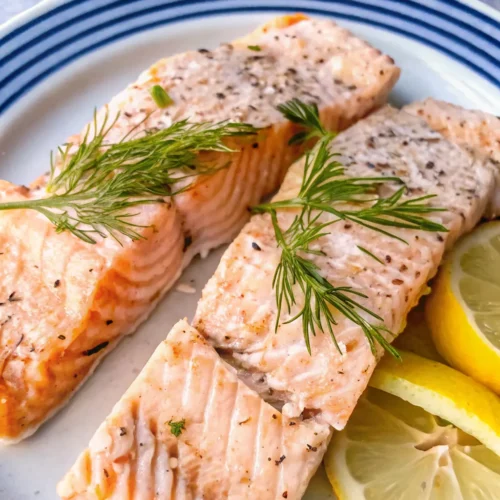
Poached Salmon Recipe (Tender, Juicy & Easy Method)
Ingredients
- 2 –4 salmon fillets fresh, skin-on preferred
- 3 cups water broth, or white wine mixture
- 1 lemon sliced
- 2 garlic cloves crushed
- Fresh herbs dill, parsley, or thyme
- 1 tablespoon olive oil
- Salt and black pepper to taste
Instructions
1. Prepare the Poaching Liquid
- Start with a wide, shallow pan — space matters more than depth here. Add water or broth, then layer in lemon slices, garlic, and herbs. Bring it to a gentle simmer.
2. Season the Salmon
- Pat the salmon dry first — it helps seasoning stick better. Sprinkle salt and pepper evenly, then add a light drizzle of olive oil.
3. Gently Add the Fish
- Lower the fillets into the liquid using a spatula or spoon. Skin side down keeps things stable. The liquid should cover the fish partially.
4. Maintain Low Heat
- Keep the heat low and steady. No sudden temperature spikes — they ruin texture fast. Cover loosely with a lid. This traps heat gently
5. Monitor the Cooking
- Check occasionally, but don’t fuss too much. Around the 10-minute mark, the color begins to change.
6. Test for Doneness
- Slide a fork into the thickest part. If it flakes easily, it’s done. Lift the salmon carefully from the liquid and let excess drip off. Place it on a plate and let it rest briefly.
Notes
Nutritional information
- Calories: 200–250 per serving
- Protein: 22–25g
- Healthy fats: Rich in omega-3
- Low carbs
- Vitamins: High in B12, D, and selenium
FAQs
How do you poach salmon?
Gently cook it in a flavorful liquid at low heat — no boiling, just a calm simmer. That’s the foundation of perfect Poached Salmon.
Is poached salmon cooked?
Yes, fully cooked but incredibly tender. It stays moist because it never faces harsh heat.
What liquid is best for poaching salmon?
Broth, water with herbs, or even white wine — each adds its own subtle character to Poached Salmon.
Is poached salmon healthy to eat?
Absolutely. It’s rich in protein and omega-3s, without added fats.
Why is it called poached salmon?
Because it’s slowly cooked in liquid — simple, gentle, and effective.
More Recipe Suggestions
- Steelhead Trout Recipe: A perfect substitute for salmon in most recipes.
- For fans of Japanese-style cooking, don’t miss out on the Hibachi Salmon.
- If you love smoky flavors, don’t miss out on trying the Smoked Salmon Brine Recipe.
- Try bite-sized versions like Salmon Bites Recipe
- Rich cuts like Salmon Belly Recipe work great under the broiler
- For bold flavor, explore Salmon Kama
- For smoky outdoor flavor, explore Grilled Salmon Recipe
- For a gentle oven method, see Baked Salmon Recipe
- This pairs well with a cold smoking trout approach.
- Salmon sashimi: how to make it at home in a few simple and safe steps
- Cold Smoked Salmon How to Make It Perfectly at Home
- Step-by-Step – How to Make Salmon Sushi Bake at Home
- What is salmon poke recipe and How is it Made?
Conclusion
Poached Salmon proves that simple cooking can feel extraordinary. It’s tender, flavorful, and surprisingly easy to master. Give it a try — share your experience in the comments, and don’t forget to subscribe for more recipes that actually work in real kitchens!
Leave a Comment
Your email address will not be published.
There are no reviews yet. Be the first one to write one.